
In recent years, the conversation around accessibility has gained increasing importance in corporate environments. Ensuring a comfortable and functional workplace is not only a matter of well-being, but also of social inclusion and respect for diversity. In this context, inclusive ergonomic furniture emerges as a strategic solution for companies that want to create more accessible offices—allowing employees with different types of disabilities to work with autonomy and safety.
Implementing inclusive ergonomic furniture goes far beyond simply adapting chairs and desks. It involves rethinking design, circulation flows, and the integration of features that truly meet each employee’s needs. By adopting this approach, companies not only comply with accessibility standards, but also strengthen their organizational culture and promote a fairer, more welcoming work environment.
Why invest in inclusive ergonomic furniture in offices
Inclusive ergonomic furniture should not be seen as an expense, but as an investment that delivers direct benefits to productivity and employee satisfaction. People with disabilities often face daily challenges in environments that were not designed for their needs. A desk that is too high, a chair without proper support, or narrow circulation areas can become physical barriers that limit performance and integration.
When companies provide comfort, autonomy, and accessibility, the results are reflected not only in employee motivation, but also in reduced sick leave related to poor posture or physical strain. In addition, adopting inclusive ergonomic furniture strengthens the brand’s image in the market and in society.
Key ergonomic adaptations for people with physical disabilities
Employees with physical disabilities—especially wheelchair users—require furniture and layouts designed to ensure mobility and comfort. Some essential adaptations include:
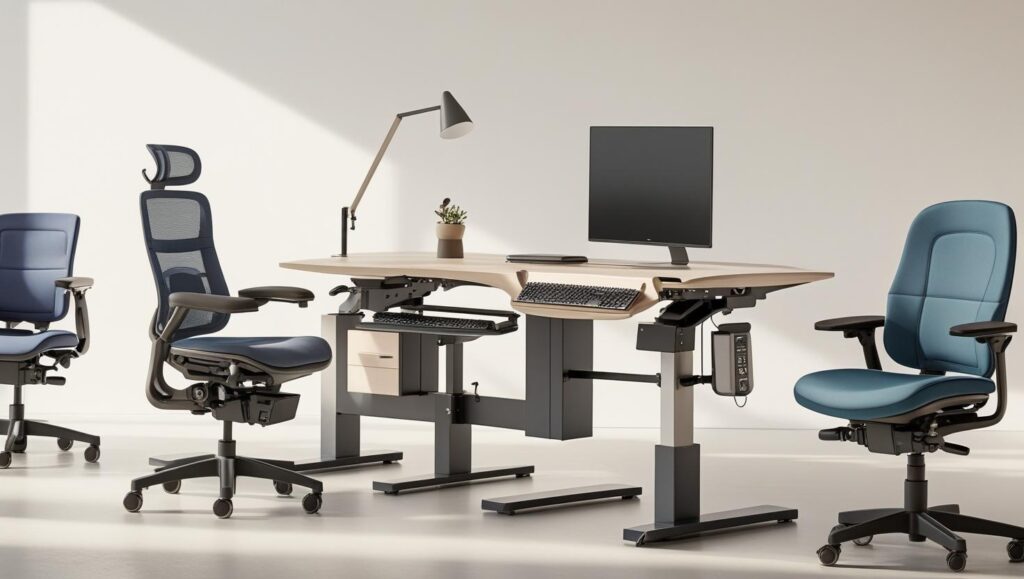
- Height-adjustable desks: allow proper clearance for wheelchairs of different sizes.
- Special ergonomic chairs: with additional spinal support, adjustable armrests, and stability features.
- Wider circulation spaces: ensuring corridors and work areas allow safe movement.
- Lowered counters: ideal for service areas, enabling interaction at the same eye level.
These solutions ensure that inclusive ergonomic furniture is not only functional, but also integrative—creating equal conditions for all employees.
Ergonomic solutions for people with visual impairments
For employees with partial or total visual impairments, furniture must be designed to ensure orientation and safety. Practical adaptations include:
- Workstations without sharp edges, reducing the risk of accidents.
- Color contrast between furniture and flooring, making visual identification easier.
- Tactile markings on desks, drawers, and cabinets, supporting organization and navigation.
- Chairs with firm lateral support, offering greater stability.
These measures make inclusive ergonomic furniture essential for increasing independence among employees with visual impairments.
Inclusive design for people with hearing impairments
Although hearing impairments do not usually require physical changes to furniture itself, space design should support effective communication. Examples include:
- Round or oval meeting tables, which facilitate lip reading and visual contact.
- Comfortable chairs with lower backs, allowing clear sightlines between colleagues.
- Acoustic panels, to reduce background noise and improve communication.
In this case, inclusive ergonomic furniture is closely linked to comfort and communication efficiency in the workplace.
Technology integrated into inclusive ergonomic furniture
With technological advances, many furniture solutions now incorporate features that enhance accessibility. Examples include:
- Electrically adjustable desks, making height changes easier for different users.
- Smart chairs with posture sensors, alerting users when adjustments are needed.
- Voice-controlled workstations, helpful for people with limited mobility.
- Built-in task lighting, supporting employees with low vision.
These innovations make inclusive ergonomic furniture not only functional, but also future-ready and aligned with modern work environments.
Organizational benefits of inclusive ergonomic furniture
The benefits of creating an accessible workplace go far beyond compliance. Key advantages include:
- Higher productivity, as employees gain comfort and autonomy.
- Reduced medical leave, since ergonomic furniture lowers the risk of injuries.
- Stronger corporate image, showing a genuine commitment to inclusion.
- Greater employee engagement, fostered by a fair and welcoming environment.
Investing in inclusive ergonomic furniture is also an investment in long-term organizational sustainability and human development.onômico inclusivo é também investir na sustentabilidade e no crescimento humano dentro da organização.
Practical tips for implementing inclusive ergonomic furniture
To adopt this approach effectively, companies can follow a few practical steps:
- Assess the specific needs of each employee with a disability.
- Work with ergonomics and accessibility specialists to guide decisions.
- Prioritize adjustable and modular furniture that adapts to different users.
- Invest in team training and awareness to promote respect and collaboration.
These actions help transform the office into a truly inclusive and efficient space. e eficiente.
FAQ about inclusive ergonomic furniture
What is inclusive ergonomic furniture?
Furniture designed to provide comfort, safety, and accessibility for people with disabilities in office environments.
What are the most common adaptations?
Height-adjustable desks, specialized chairs, wider circulation areas, and accessible design for different types of disabilities.
Is this type of furniture expensive?
It may involve a higher initial cost, but the return comes through higher productivity, fewer health-related absences, and a stronger brand image.
What role does technology play?
Technology makes furniture more practical and functional, enabling automatic adjustments and integrated accessibility features.
Inclusive ergonomic furniture goes far beyond a design detail—it represents a real commitment to diversity and accessibility. Companies that invest in this approach show they are prepared for the future, valuing their people and ensuring equal working conditions.
And you—have you ever stopped to consider whether your office is truly prepared to be inclusive? What changes would you make to turn the space into a more accessible environment? Share your ideas with us.