
The world of work is changing rapidly, and corporate furniture is evolving strategically alongside it. In 2025, trends in corporate furniture are increasingly focused on ergonomics, sustainability, and personalization—reflecting companies’ need to create functional, welcoming spaces aligned with organizational culture. More than simple objects, furniture becomes a tool that directly impacts productivity, health, and employee satisfaction.
Adopting corporate furniture trends is not about following fads, but about understanding how each choice affects employee well-being and business performance. In this article, we explore the key directions shaping office design in 2025, with practical examples, application tips, and insights into the future of work.
Why corporate furniture trends matter in 2025
If offices were once seen merely as places to work, today they are spaces designed to deliver experiences, stimulate creativity, and reinforce brand identity. Corporate furniture trends for 2025 respond to this shift by combining comfort, design, and technology. Companies that overlook this risk losing talent and seeing productivity decline.
The integration of ergonomics and aesthetics, the rise of modular furniture, and the use of sustainable materials stand out. Together, these elements show a growing awareness of the importance of long-term investments that benefit both people and the planet.
Integration of ergonomics and modern design
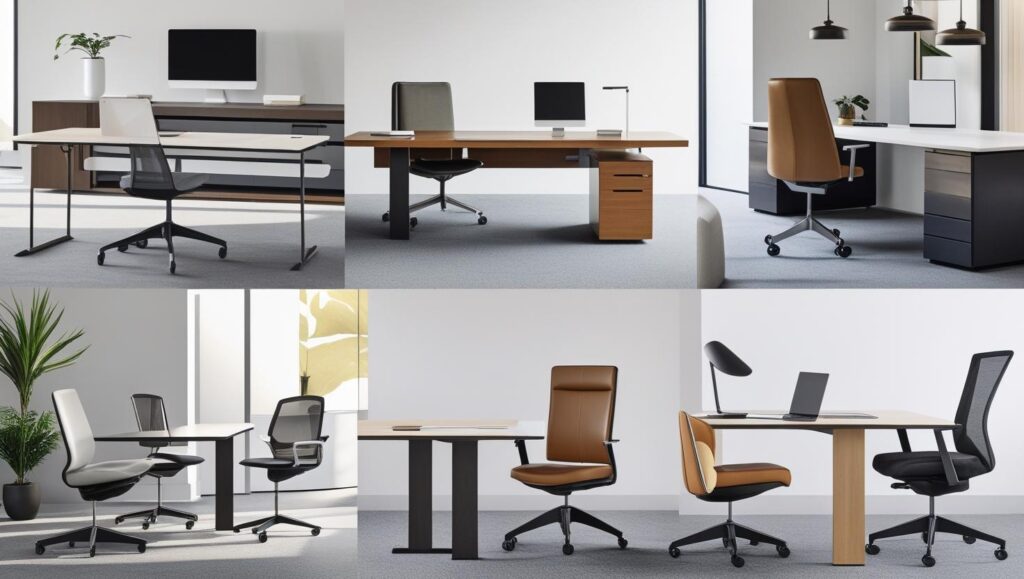
One of the strongest trends for 2025 is furniture that combines ergonomics with refined, modern design. Adjustable chairs, height-adjustable desks, and compact workstations now feature contemporary aesthetics, making offices more professional and visually appealing. Corporate furniture trends show that ergonomics doesn’t have to mean a plain look—it’s possible to balance comfort with strong visual identity.
This balance ensures offices are functional while communicating values such as innovation, modernity, and care for people. Well-designed furniture also reinforces brand perception for clients and partners.
Modular and flexible furniture
Flexibility has become a core requirement in corporate environments. With hybrid work models on the rise, many companies need to reorganize spaces frequently. As a result, modular furniture stands out among corporate furniture trends for 2025. These solutions allow multiple configurations and easy adaptations, supporting changing team needs without high costs.
- Foldable tables: ideal for quick, dynamic meetings
- Modular sofas: can be arranged in different layouts
- Mobile storage units: enable layout changes without renovations
This approach gives companies the freedom to customize spaces as needed, improving efficiency and making better use of available areas.vel.
Sustainability as a priority
Environmental responsibility strongly shapes corporate furniture trends in 2025. The use of recycled materials, certified wood, and eco-friendly fabrics is no longer a differentiator—it’s often an expectation. Suppliers that adopt sustainable practices gain credibility and help reinforce their clients’ responsible brand positioning.
The circular economy concept—designing furniture with longer life cycles and reuse potential—is also gaining momentum. This reduces operational costs while strengthening the company’s image among stakeholders.
Technology integrated into furniture
In 2025, technology is deeply embedded in office environments, and furniture plays a key role in this connected ecosystem. Among the top corporate furniture trends are desks with built-in wireless chargers, chairs with posture sensors, and workstations with voice-controlled adjustable lighting.
These innovations enhance functionality and improve the user experience. Companies that adopt such solutions signal modernity and genuine concern for employee quality of life—important factors for attracting and retaining talent.
Collaborative spaces and informal furniture
Collaborative workspaces continue to grow, and furniture is evolving accordingly. Instead of fixed individual stations, there is increased use of shared tables, poufs, benches, and lounge areas. This trend supports cross-team interaction and idea exchange.
Within corporate furniture trends for 2025, this design approach also supports mental well-being, creating more relaxed, welcoming environments where employees feel comfortable collaborating and innovating.
Personalization aligned with brand identity
Every company has its own culture and values, reflected in the furniture it chooses. Personalization is one of the most relevant corporate furniture trends, as it transforms offices into spaces that subtly and consistently communicate brand identity.
Elements such as brand colors in upholstery, custom table designs, and personalized decorative panels reinforce company messaging and foster a sense of belonging among employees.
Practical benefits of following corporate furniture trends
Adopting 2025 trends is not just about looks—it’s a strategic decision. Key benefits include:
- Improved employee health and well-being
- Higher productivity and engagement
- Better use of small and dynamic spaces
- Stronger brand presence through design
- Long-term savings with sustainable and modular furniture
Conclusion: the future of corporate furniture is human-centered and smart
Corporate furniture trends for 2025 show that the future of offices lies in the integration of ergonomics, aesthetics, sustainability, and technology. Furniture is no longer just functional—it shapes the work experience, supports creativity, and reinforces organizational culture.
Companies that invest in intelligent, flexible furniture aligned with their values will be better positioned to stand out in an increasingly competitive landscape. The question is: is your office ready for these changes?
Questions to encourage engagement
Which of these trends do you see as most important for the future of offices? Do you believe integrated technology will be a game changer in corporate furniture? Share your thoughts with us.
What are the main corporate furniture trends for 2025?
Ergonomics combined with design, modular furniture, sustainability, integrated technology, and personalization.
Why invest in ergonomic furniture?
Because it ensures employee health, comfort, and higher productivity.
How can furniture reflect company identity?
Through colors, materials, and design aligned with organizational culture.
Is sustainable furniture more expensive?
Not necessarily. While the initial investment may be higher, durability often reduces long-term costs.
Which furniture works best for small offices?
Compact workstations, foldable tables, and modular furniture are the most suitable options.