
In both corporate and residential design, the search for solutions that optimize space is constant. Smart partitions have become key players in this context, allowing environments to be divided efficiently, practically, and with strong visual appeal. More than simple barriers, these structures work as strategic tools to organize space, control acoustics, and reinforce the identity of an environment—without sacrificing flow.
Throughout this article, we’ll explore how smart partitions can be applied in different contexts, from offices to multifunctional homes, with practical tips and examples to help you choose the best solutions. The goal is to show that it’s possible to define spaces clearly without compromising circulation or the sense of openness.
The concept and evolution of smart partitions
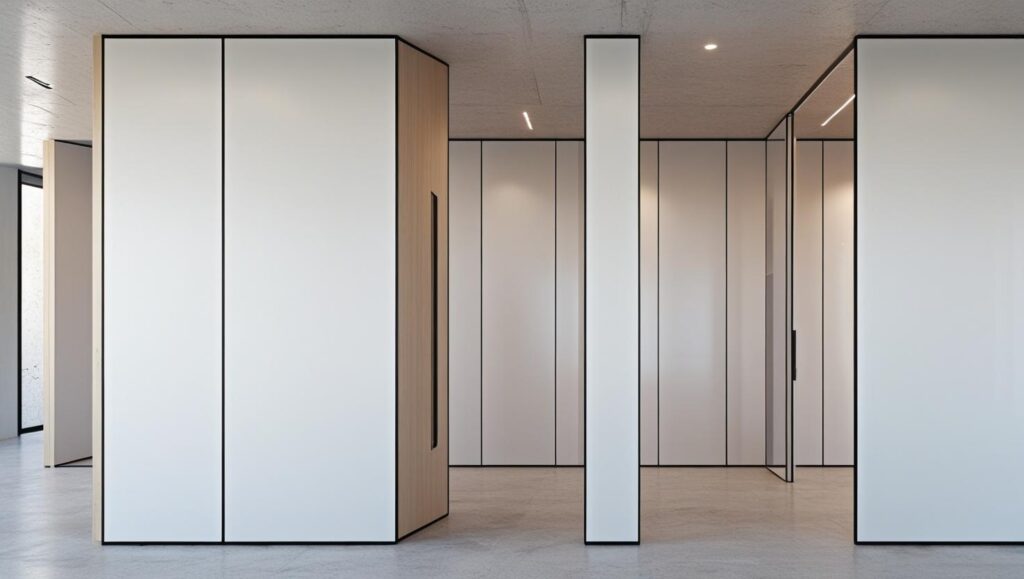
Smart partitions have evolved far beyond traditional fixed walls. Today, they combine technology, sustainable materials, and innovative design to deliver not only privacy, but also visual integration and functionality. Options include retractable and movable partitions, acoustic glass, modular panels, and even automated systems that adapt to user needs.
This evolution reflects the growing demand for flexible, adaptable spaces—especially in contemporary offices and compact residential environments. By investing in these solutions, you gain organization, versatility, and a strong aesthetic element.
Benefits of smart partitions in different environments
Smart partitions offer advantages that go well beyond simply dividing spaces. Their benefits are practical, visual, and even financial, including:
- Flexibility: layouts can be reconfigured as needs change
- Improved acoustics: sound control in areas that require focus or privacy
- Customized aesthetics: materials, colors, and finishes that reflect the space’s identity
- Space optimization: better organization without losing a sense of openness
These advantages make smart partitions an attractive solution for companies rethinking office layouts and for homes that need to accommodate multiple functions in the same area.
Most common materials used in smart partitions
Material selection is one of the most important steps when planning smart partitions. Each option offers unique characteristics that directly affect both performance and appearance. Popular materials include:
- Glass: light, modern, and ideal for maintaining natural light and openness
- Acoustic panels: perfect for offices that require sound insulation
- Wood and MDF: add warmth and sophistication, creating inviting environments
- Sustainable materials: recycled panels and eco-friendly solutions that align function with environmental responsibility
By combining different materials, it’s possible to create unique smart partitions that meet functional needs while reinforcing the style of the space.
How to maintain visual flow with smart partitions
One of the biggest challenges when installing smart partitions is preserving visual flow and natural circulation. Choosing solutions that allow light to pass through or offer mobility is key. Frosted glass partitions, for example, provide privacy without fully closing off spaces, while retractable panels can be opened when separation isn’t needed.
Height and scale also matter. Lower or modular partitions can define work areas without creating visual barriers—a common strategy in coworking spaces, where privacy and integration must coexist.
Integrating technology into smart partitions
Modern smart partitions often incorporate technology to enhance functionality. Some systems include remote-controlled panels, electrochromic glass that switches from transparent to opaque at the touch of a button, and integration with building automation systems.
These features are especially useful in meeting rooms, auditoriums, and multifunctional spaces where layouts need to change quickly. Beyond practicality, they add a contemporary, innovative feel to the environment.
Practical applications in offices
In offices, smart partitions are an efficient way to create work areas, meeting rooms, and breakout spaces without major construction. They allow layouts to evolve as teams grow or workflows change.
Common applications include:
- Temporary meeting rooms created with movable partitions
- Acoustically isolated workstations using modular panels
- Collaborative areas defined without blocking natural light
These solutions boost productivity and comfort while giving corporate spaces a modern edge.
Practical applications in residential spaces
In homes, smart partitions help separate areas without compromising aesthetics or usability. They’re ideal for compact apartments and homes that combine multiple functions, such as open kitchens, living areas, and home offices.
Examples include:
- Glass partitions between kitchen and living room to preserve light
- Sliding panels to close off a home office when needed
- Open shelving used as decorative room dividers
In addition to being versatile, these solutions can increase property value and improve everyday comfort.
Tips for choosing smart partitions
When selecting smart partitions, consider the following practical criteria:
- Space requirements: level of privacy, acoustic control, and flexibility needed
- Design style: materials and colors that align with the visual identity
- Ease of installation: solutions that don’t require major renovations
- Durability and maintenance: high-quality products that are easy to clean and maintain.
These points help ensure the choice is both functional and visually aligned with the space.
Sustainability and cost efficiency with smart partitions
Smart partitions can also support sustainability goals. Options made from recycled, certified, or low-impact materials are increasingly available. In addition, the ability to reconfigure spaces without construction reduces waste and renovation costs.
This sustainable approach is valued by both companies and homeowners, reinforcing an environmentally responsible image
Combining smart partitions with other design elements
For smart partitions to work seamlessly, they must be integrated with lighting, furniture, and color schemes. Proper lighting can highlight textures and materials, while furniture placement should support circulation and avoid conflicts with panels or tracks.
This integration ensures a harmonious, functional, and visually appealing result.
Common mistakes when installing smart partitions
Despite their benefits, mistakes can happen—such as choosing materials that don’t meet acoustic needs, ignoring natural light, or failing to plan circulation. Avoiding these issues requires proper planning and, ideally, guidance from a specialized professional.
With the right approach, smart partitions become a safe and long-lasting investment.
Conclusion: partitions that transform spaces
Smart partitions are far more than simple dividers. They represent a new way of thinking about space—balancing privacy, functionality, and aesthetics. Whether in offices, homes, or hybrid environments, these solutions allow spaces to be segmented without losing flow, ensuring comfort and practicality.
With well-planned partitions, you gain flexibility to adapt spaces to daily changes, reinforce visual identity, and support sustainability. Investing in smart partitions is investing in a more efficient and enjoyable environment.
Questions for interaction
Have you ever used smart partitions in a project or space? Which types caught your attention the most? Share your ideas and experiences with us.
FAQ
What are smart partitions?
Modern systems that divide spaces with flexibility, technology, and design.
What are the main benefits?
Flexibility, acoustic control, aesthetic customization, and space optimization.
Can they be used in homes?
Yes—especially in apartments and homes with open-plan layouts.
Are there sustainable options?
Yes, including recycled and low-impact materials.
Do I need a professional to install them?
In many cases, yes—to ensure proper performance, safety, and the best result.